
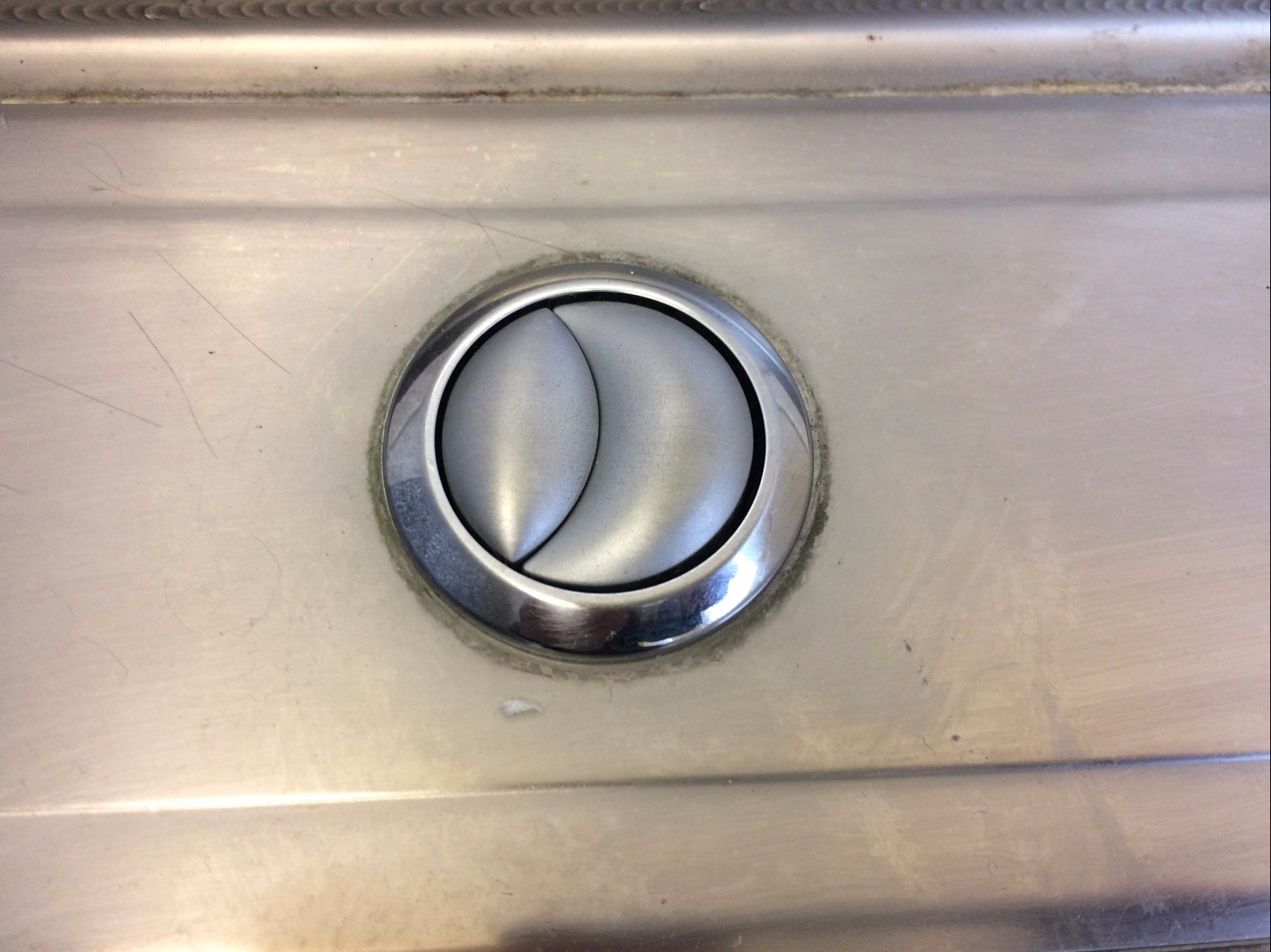
We all do it but have you paid more attention to or are you even aware of how we seek to be kinder to the planet when we flush? I am consistently confused by the significance of the size of the button when it comes to flushing the toilet/loo/can (delete as appropriate).
What does size mean without a label? Does a bigger button mean a larger target, and therefore meant to be used more regularly? Or does it mean that mean that the outcome is larger, or longer? I am baffled.
Then I am sure too, in the context of personal user testing, that the same interface has been ‘connected’ up differently depending on where you are. In one, the small button is the longer flush, in another it only flushes for the length of time I push it. There is obviously the conditioning in terms of gender, and location. For a male without urinals being present, it presents choice paralysis; a minor dilemma when we think that a small. flush isn’t going to cut it.
So what does this mean?
Context is really important but without any other indicator our intention is wasted. It is too late for error recovery once the action has been instigated. Or at the very least, suffering the penalty of time whilst the cistern waits to refill again; albeit possibly from half way.
Where size is a constant, meaning or expected action is not. Affordance can help but it is not necessarily aligned to my intention. A signifier presented in isolation is not necessarily enough within a given context. It is the same for other interfaces we create. As designers and architects, we intend one thing but actually risk signifying something else that isn’t intended instead.
Who’s going to hangout and user test this in more detail without feeling odd? Solve this, and you could be responsible for single handedly saving the largest amount of water on the planet and remove the guess work. Or have we gone about this the wrong way and that we should just be designing something that affords to be pressed for the length of flush that is needed?
 Frazer Cooper