
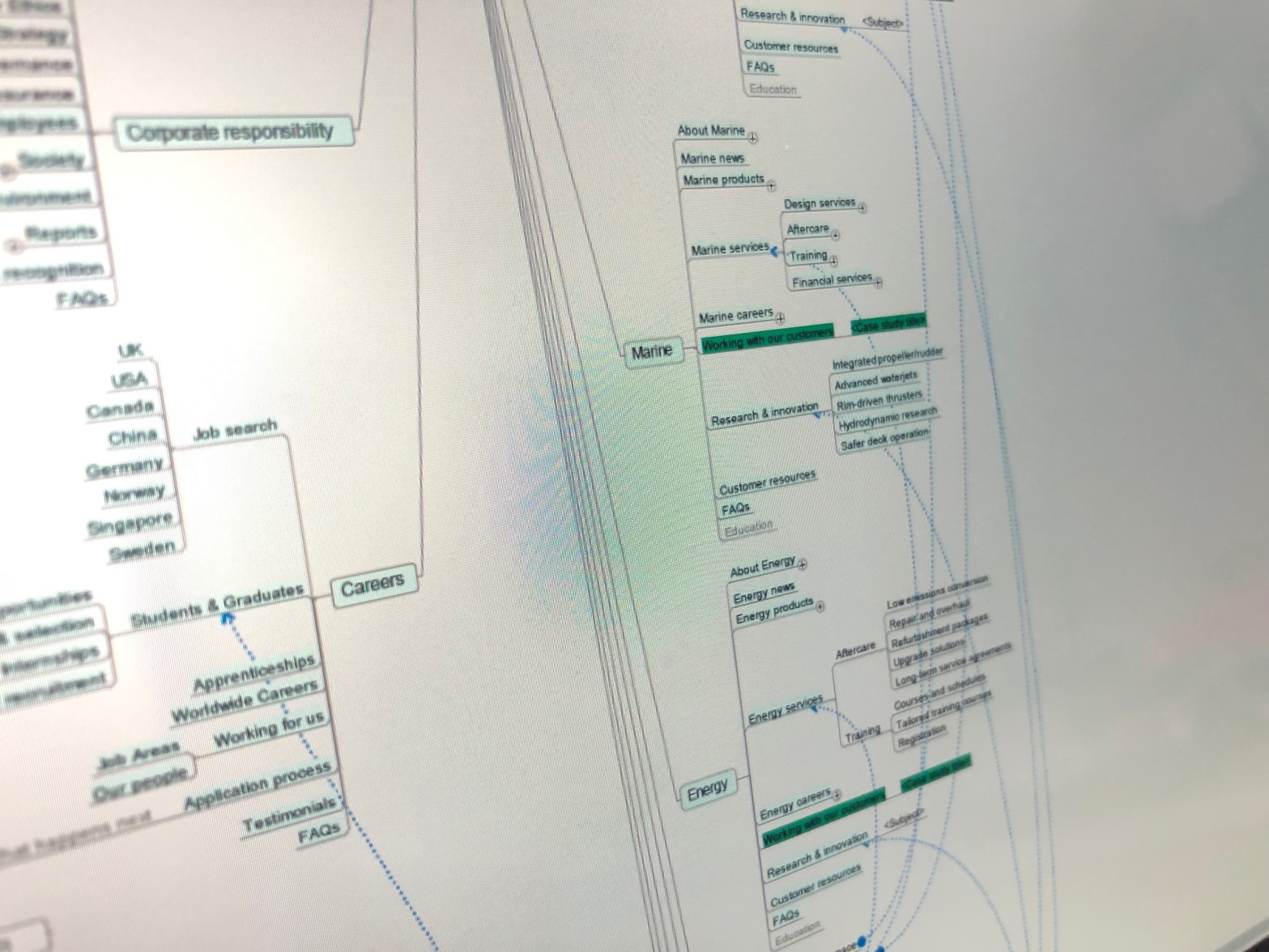
As a skill set, Information Architecture or IA is still centric in creating intuitive user journeys. A workable definition of information architect is the organisation of information so that it becomes manageable, recognisable and most important, useful.
A clear and understandable structure is still vital in encouraging users to interact with and guide them in becoming immersed in your digital products. Creating a logical and meaningful content structure goes hand in hand with creating a truly valuable and useful navigation structure; both can’t exist as separate entities but inform each other holistically. The reasons for the demise in this as a skill set isn’t perhaps immediately obvious.
A strong and well considered content structure informs the navigation; navigation is the method by which we search for information. The search for information is finding an answer in the context of uncertainty.
When a user is searching for an idea or information, the semantics of language means that it is harder to understand exactly what the user is searching for. The terms that the user is looking for may only be related to the taxonomy that you have published but you may have the answer that they are looking for.
Ok, so Google is really good a finding content that is related to the search terms and the content that you publish. (But please remember this, you are only being found by Google on those terms that you have targeted.)
A sound structure and content hierarchy will encourage users to explore what you have to offer beyond the user behaviour of zeroing in on singular words. Sign posting within an easy to understand structure may help the user to find useful answers sooner. Additional engagement will help create a memorable experience and help to drive increased repeat visits for interested users who themselves are part of a community.
A good structure is also persuasive in that it can lead the user to something that they hadn’t necessarily considered before. People often react to words that they see without questioning what is behind those words that they click on; this is what separates orientating oneself and persuasive calls to action or signposts. The job of the information architecture is to orientate.
 Frazer Cooper